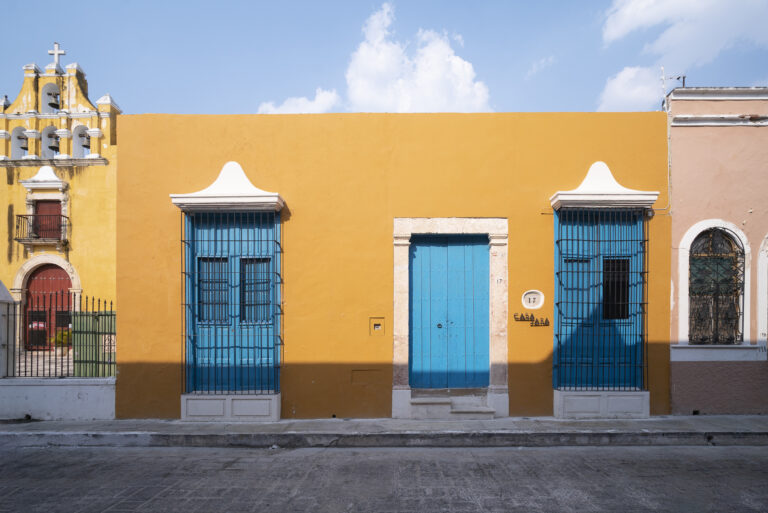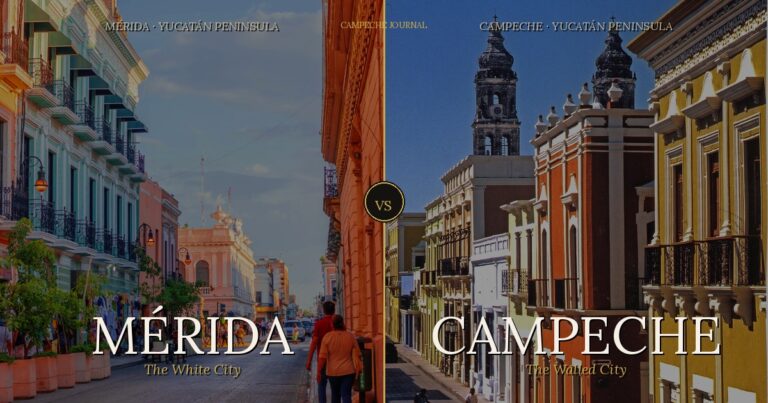
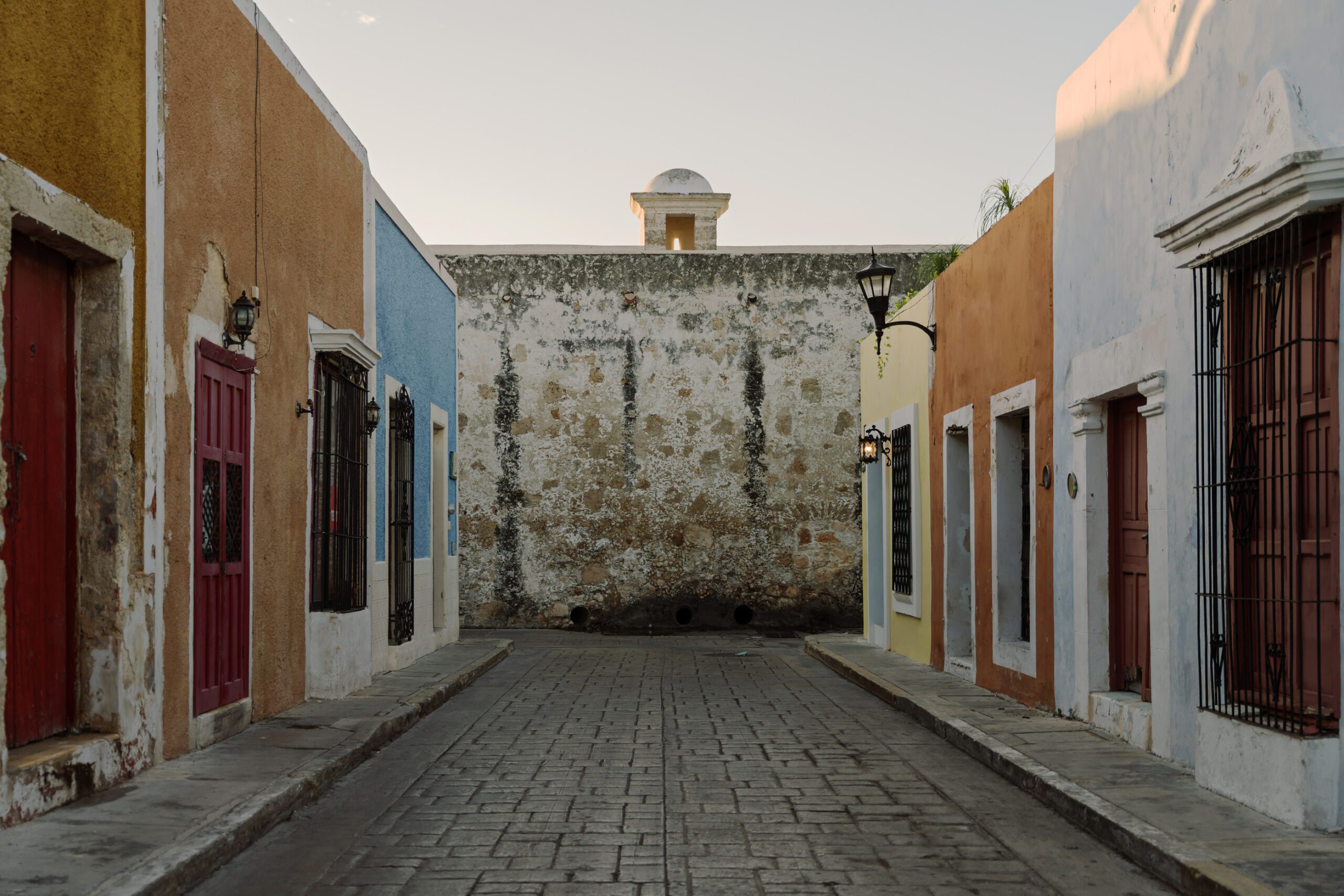
You notice the color before anything else. Walking into Campeche’s historic center for the first time, most travelers stop mid-stride — not at a particular building, but at the street itself: an unbroken run of facades in yellow, rose, cobalt, terracotta, mint, and gold.
This is not decoration. It is identity. And it has a history worth understanding.
Colonial Origins
Campeche was founded by the Spanish in 1540. The distinctive pastel facades arrived gradually through the 18th and 19th centuries, as lime-based plasters mixed with natural pigments became the standard finish. The lime served a practical purpose: protection against humidity and the salt air of the Gulf coast.
The Palette and What It Tells You
The INAH and the city’s historic preservation office maintain a register of approved facade colors for the protected zone — the same zone that earned UNESCO World Heritage designation in 1999.
Yellow and gold remain the most common, historically associated with civic and religious power. Terracotta and ochre appear throughout the residential streets. Cobalt and deep blue mark historically prosperous buildings. Mint and sage green became prevalent in the 19th century Porfiriato period.
How to Read a Building
Start with the doors: tall, deeply carved wooden doors in elaborately molded stone frames indicate a wealthy household. Ground-floor windows typically feature heavy iron grilles (rejas) — a security feature from a city that spent two centuries defending itself against pirate raids.
Finally, look at the color itself: what looks freshly painted is often a surface laid over decades of accumulated color — each layer a different year, a different owner’s choice.
The Living City
The historic center is not a museum. It is a city that happens to be very old and very beautiful, and that has chosen — carefully, imperfectly — to keep that beauty alive.
Four hundred years of people painting their houses the colors they loved.