There is a particular quality of light in Campeche’s historic center — the way it falls through a doorway in the morning, lands on a hydraulic tile floor, and fractures into something almost ceremonial. It is not accidental. It is the product of a building tradition more than three centuries old, one that treated architecture not merely as shelter but as choreography.
At Casonas MX, we live inside that tradition. Each of our colonial houses in Campeche’s UNESCO-listed Centro Histórico is a study in the architectural vocabulary of New Spain: thick limestone walls, central patios open to the sky, barrel-vaulted ceilings, and those irreplaceable floors of hand-pressed mosaico hidráulico that publications like Architectural Digest and Wallpaper* have described as among the most visually compelling elements in Mexican heritage interiors.
What follows is a slow walk through the five elements that define our houses — and that make staying in them fundamentally different from any hotel.
The Wall as Architecture
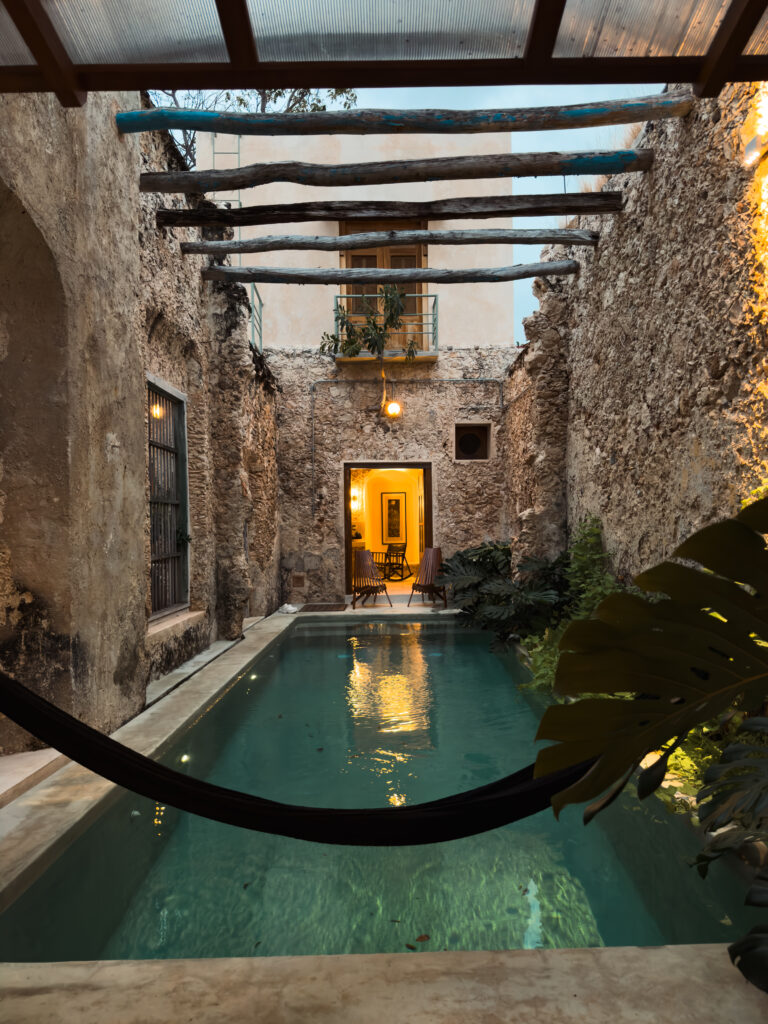
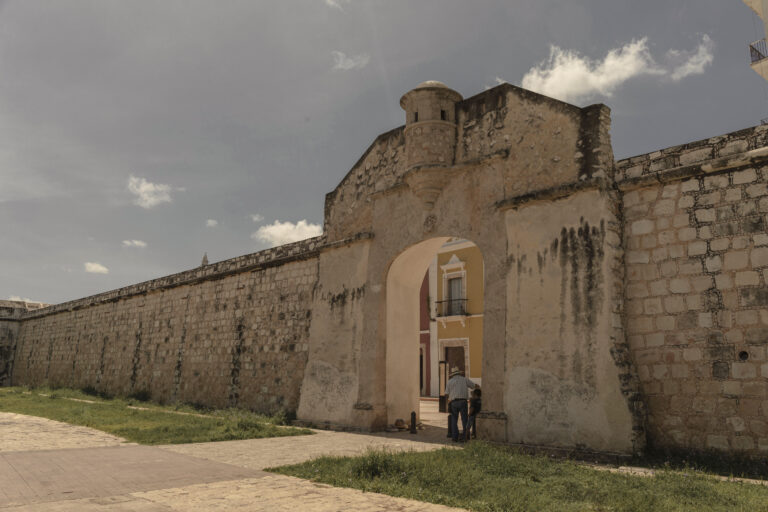
The walls of a Campeche colonial house are not partitions. They are load-bearing elements of mampostería — a composite of limestone, shell aggregate, and lime mortar — that can reach 80 centimeters in thickness. This is not historical accident. The same thermal mass that once protected inhabitants from tropical heat continues to perform today: interiors stay 4–6°C cooler than outside without mechanical assistance during the dry season.
Publications like Dezeen have increasingly documented how colonial-era passive cooling strategies are influencing contemporary sustainable design across Latin America. At Casonas MX, this is not an engineered feature. It arrived with the house.
The Patio as Living Room
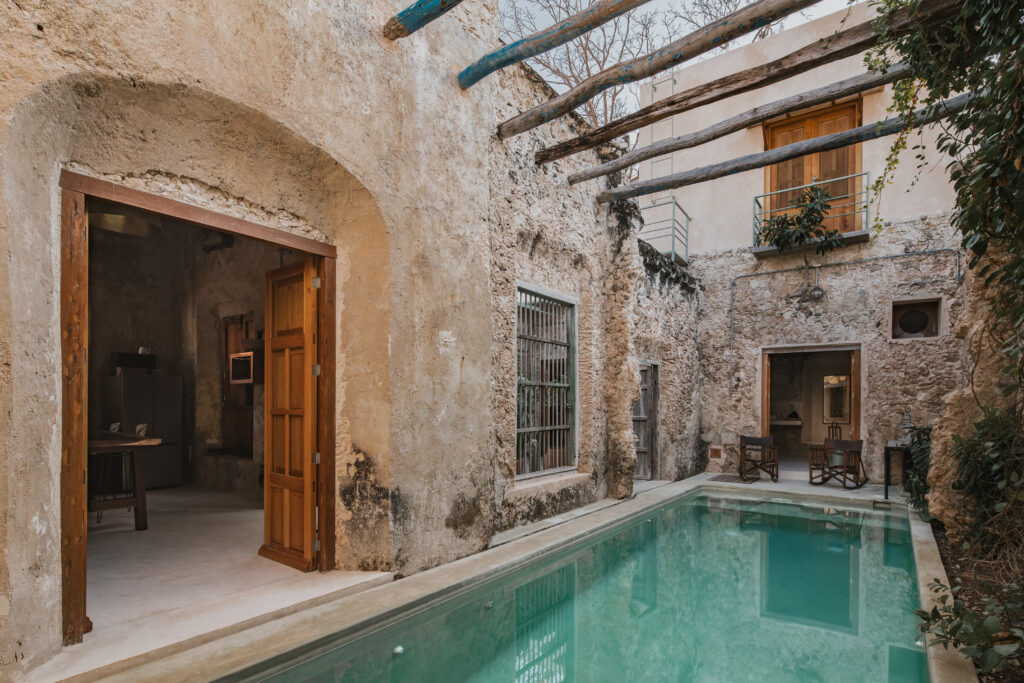
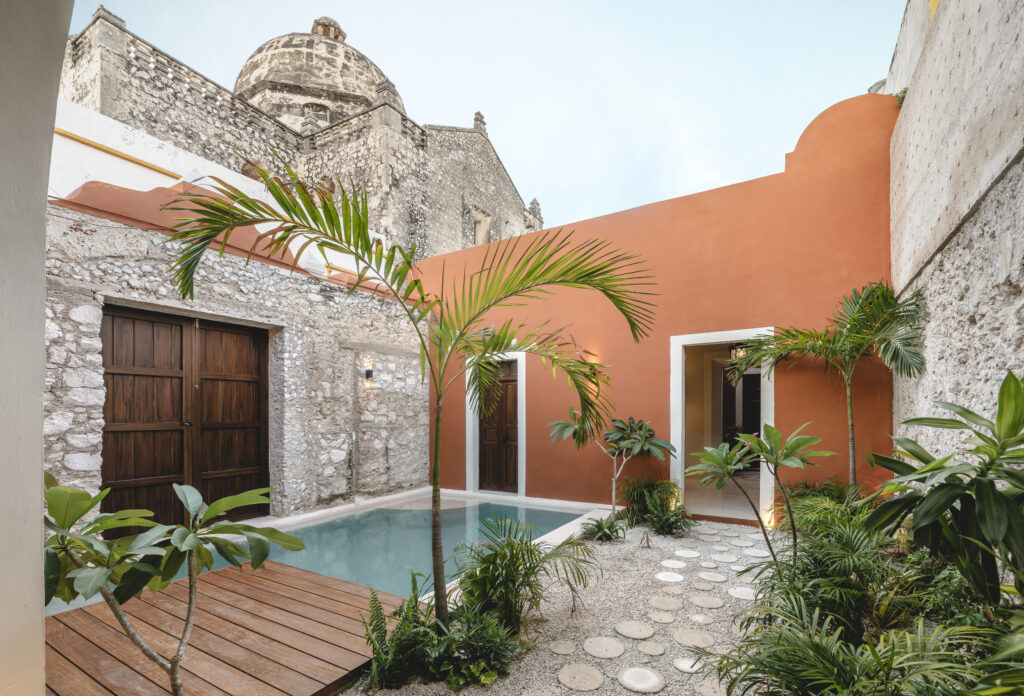
The organizing principle of every Campeche colonial house is the central courtyard — the patio interior. Surrounded by arcaded corridors (portales), it functions as the lung of the structure: drawing in breeze, diffusing light, and providing the kind of ambient sound — water, birds, rustling leaves — that no designed acoustic environment can fully replicate.
Travel + Leisure named Campeche among the most architecturally significant colonial cities in the Americas partly because of the coherence of this typology. The patio is not decorative. It is structural to how the house breathes.
The Floor as Document
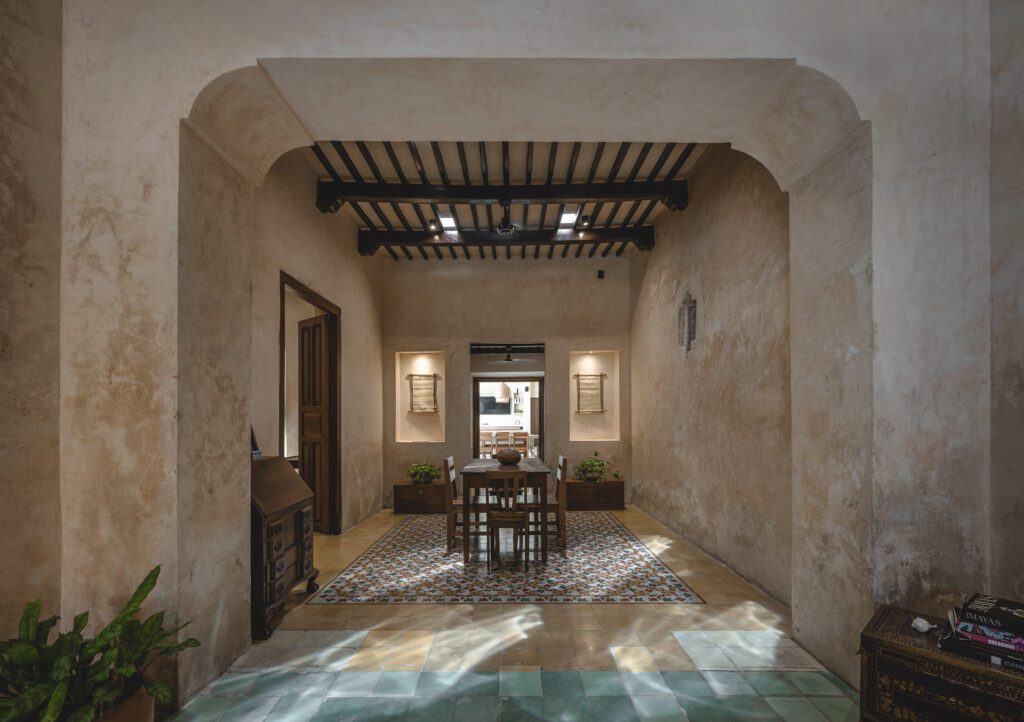
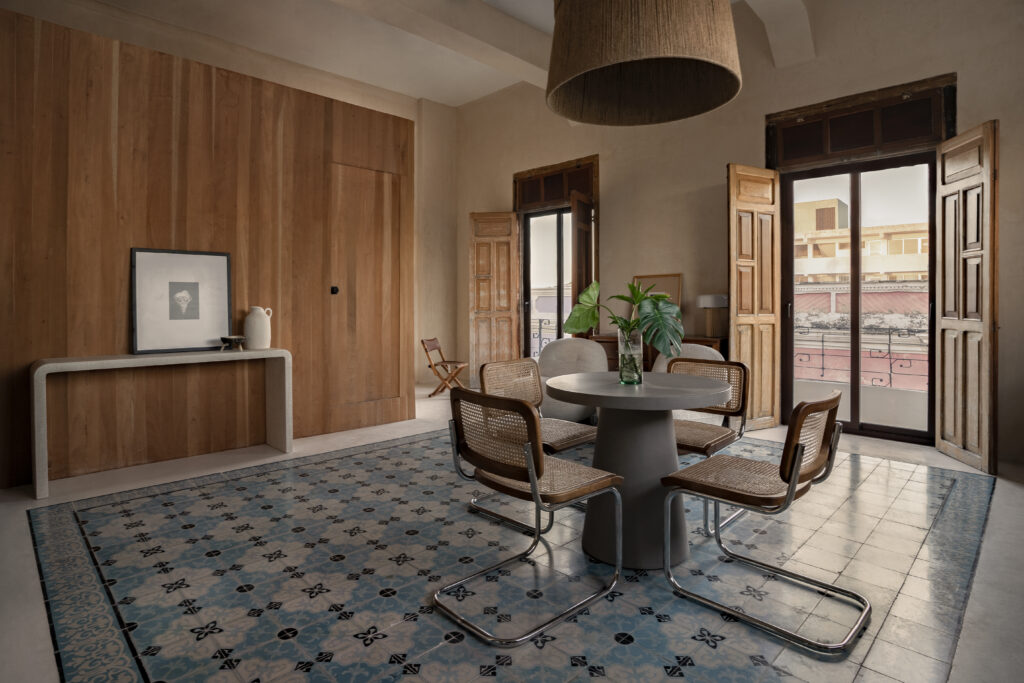
Ask any conservation architect in Mexico what is most at risk in colonial interiors, and the answer is almost always the same: the floors. Specifically, the hand-pressed mosaico hidráulico — cement-based tiles produced using pigmented hydraulic compounds pressed into brass molds — that were installed in Campeche’s finest houses from the late 19th century onward.
No two tiles are quite identical. The color variation, the slight irregularities in pattern registration, the way the surface has been worn smooth by a century of footfall — these are qualities that no contemporary reproduction captures. Condé Nast Traveler has repeatedly cited Campeche’s hydraulic tile heritage as one of the city’s defining visual signatures. At Casonas MX, we have restored rather than replaced. The floors you walk on are original.
The Ceiling as Ambition
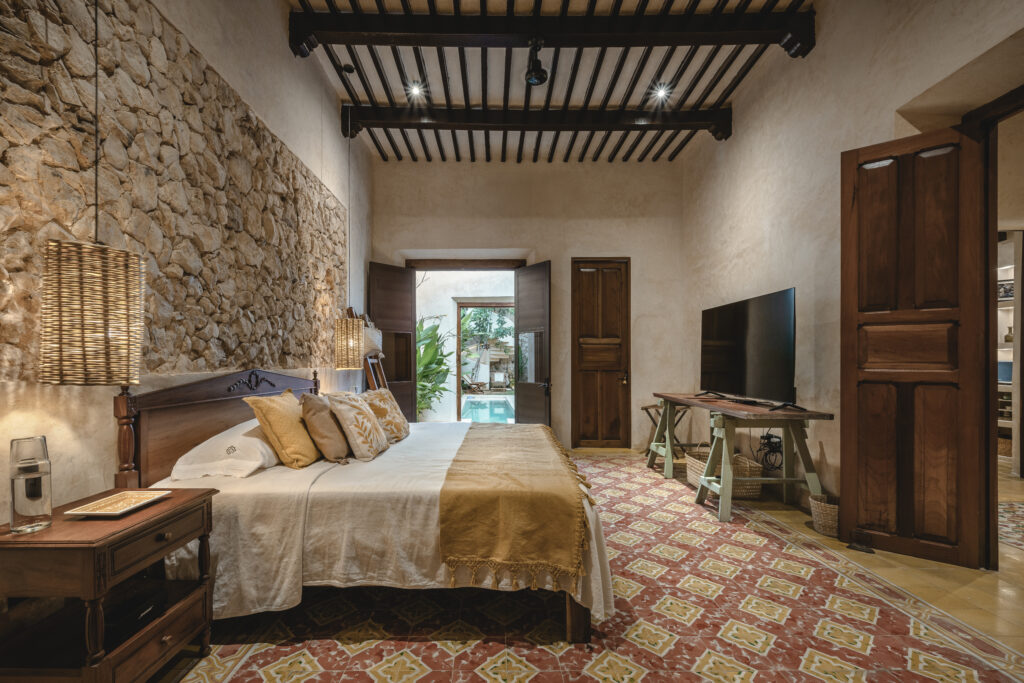
Colonial builders in Campeche worked in two dominant ceiling registers: the bóveda de cañón — a barrel vault constructed in brick and lime — and the flat entrepiso with exposed timber beams (vigas de madera) imported from the Yucatán forests. Both speak to the ambition of the original construction. Vaulted ceilings required skilled labor and expensive materials. Timber-beam ceilings required sourcing consistent hardwood across long spans. Either choice was a statement of permanence.
The ceilings at Casonas MX were built to outlast their builders. They will outlast several more generations yet.
The Façade as Conversation
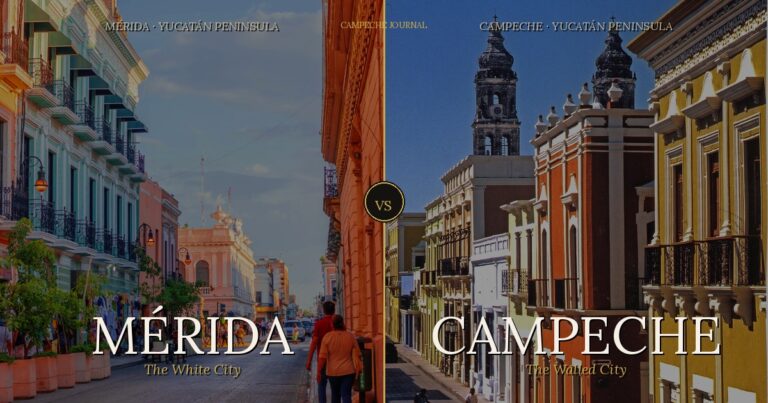
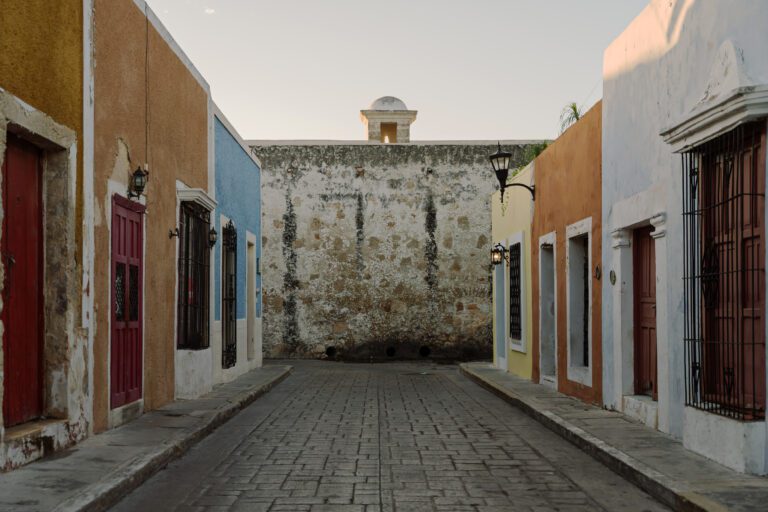
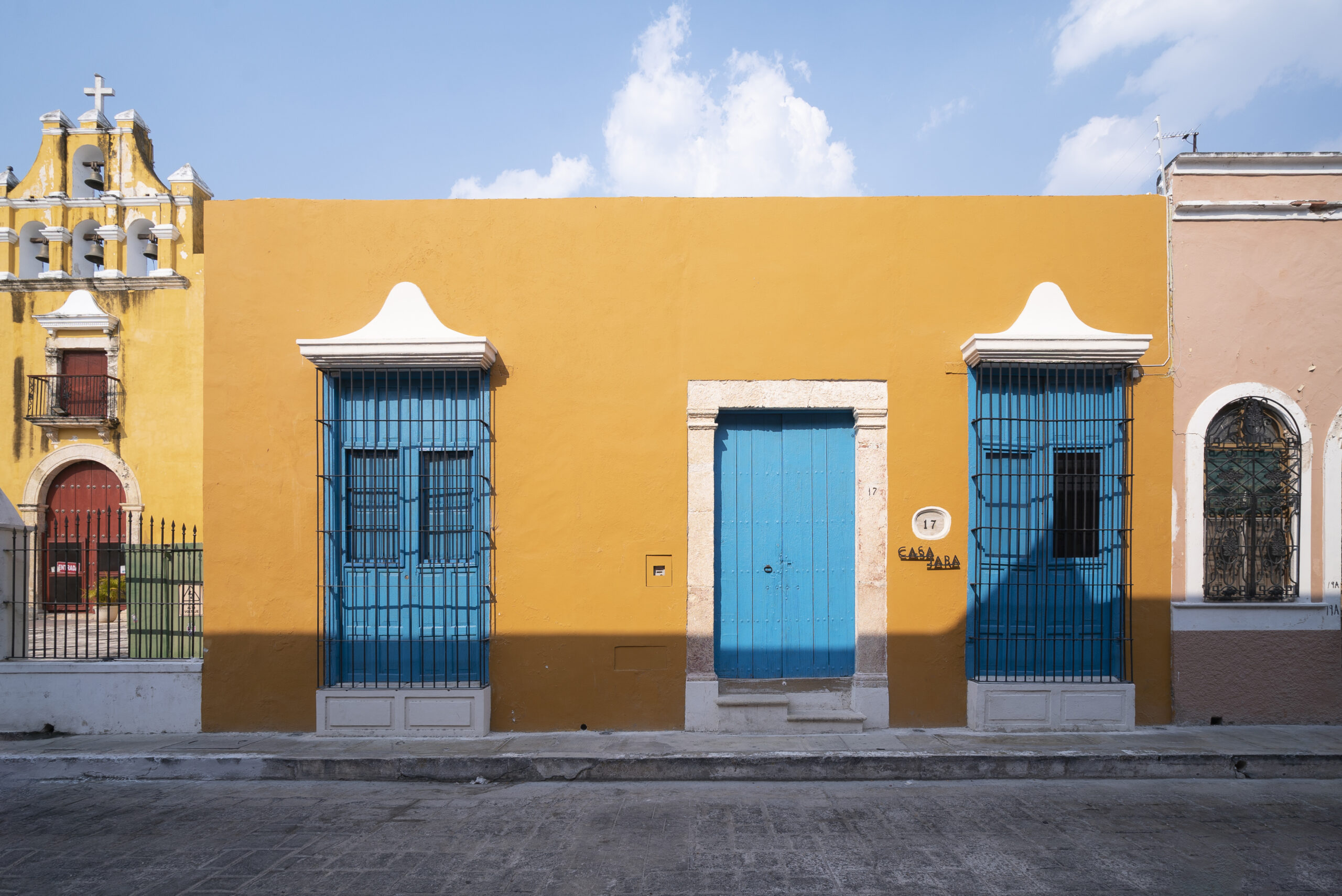
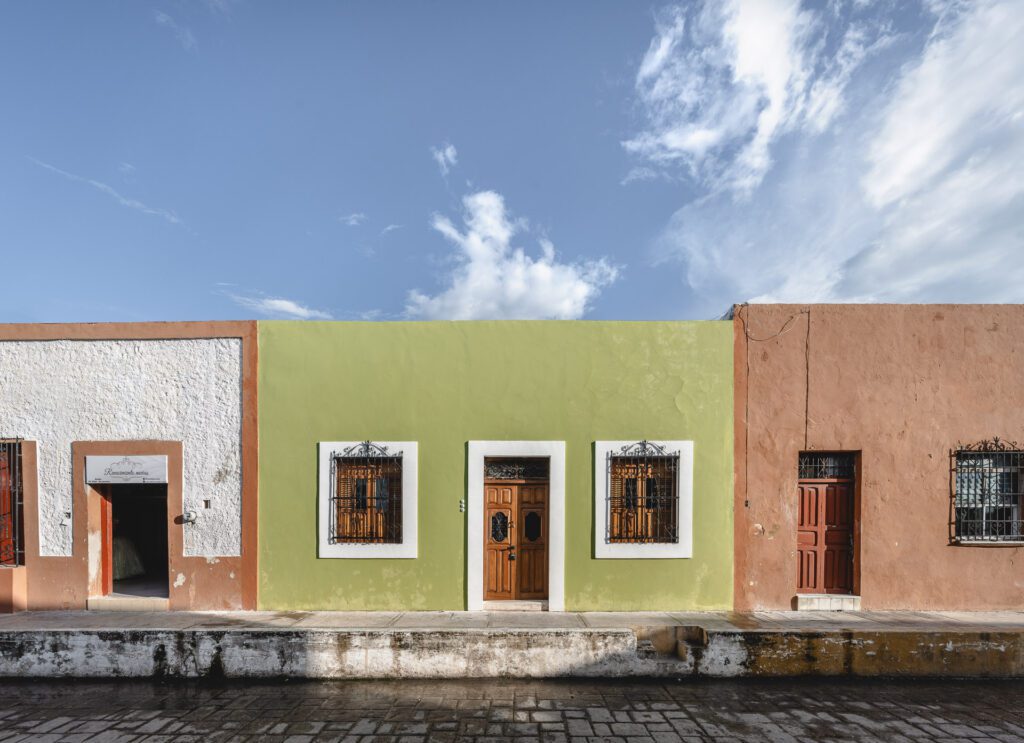
Campeche’s Centro Histórico is one of the most chromatically distinctive urban environments in the Americas. Mexico’s INAH (Instituto Nacional de Antropología e Historia) maintains strict guidelines on the color palettes permitted for historic façades — the ochres, terracottas, yellows, and deep blues that give the city its photographic signature and were central to its UNESCO World Heritage designation.
Monocle, Wallpaper*, and Architectural Digest have all covered Campeche’s street architecture in recent years, consistently noting the chromatic coherence of the historic center as something genuinely rare in the region. Our façades are maintained in their period-correct colors — and are, as guests frequently note, difficult to walk past without stopping.
Staying Inside Architecture
The experience of Casonas MX is inseparable from these architectural facts. You are not adjacent to the history of this city. You are inside it — sleeping in rooms where the ceiling has been vaulted for two hundred years, walking on floors laid by craftsmen whose names no one recorded, looking out through wrought-iron window grilles (rejas) at a street that has changed remarkably little in form since the colonial period.
This is what we mean when we describe our houses as heritage accommodations. Not a theme. Not a reproduction. The original.