
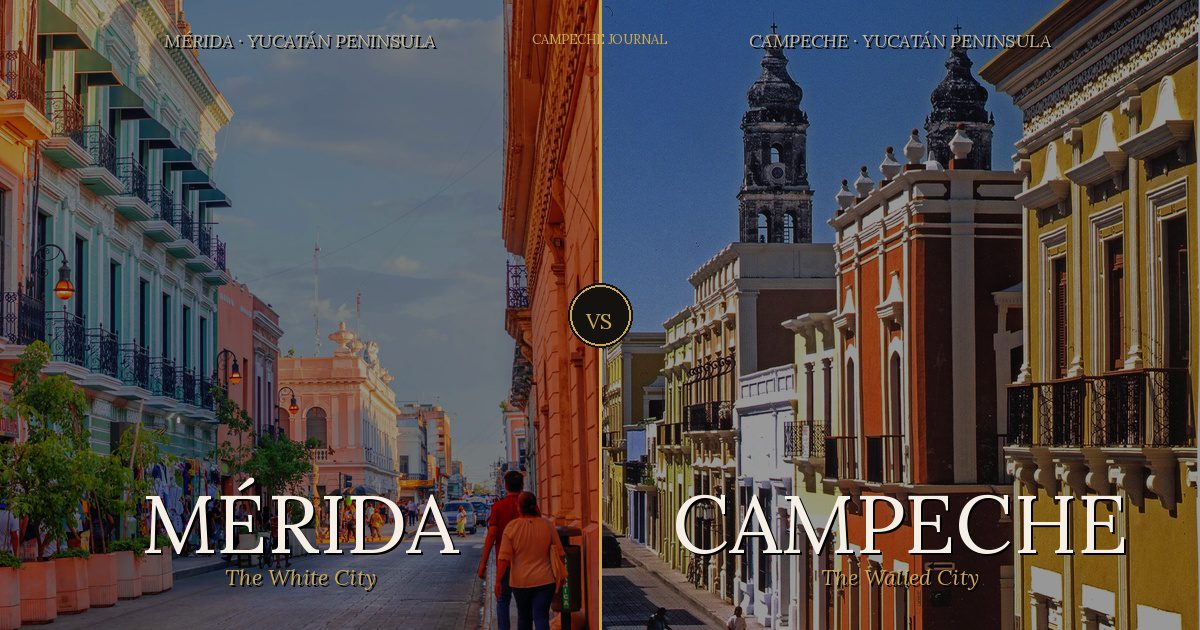
Most travelers arrive at the Yucatán Peninsula with Mérida already circled on their map. Fewer know that three hours to the southwest, a smaller, quieter, arguably more beautiful colonial city has been waiting — largely undiscovered — behind its own ancient walls.
This is not a travel ranking. It’s an honest comparison of two genuinely extraordinary places, written to help you choose the one that fits the kind of traveler you actually are.
The Quick Answer
Choose Mérida if you want a vibrant, cosmopolitan city with world-class restaurants, a buzzing arts scene, and easy access to major Maya archaeological sites like Uxmal and Chichén Itzá.
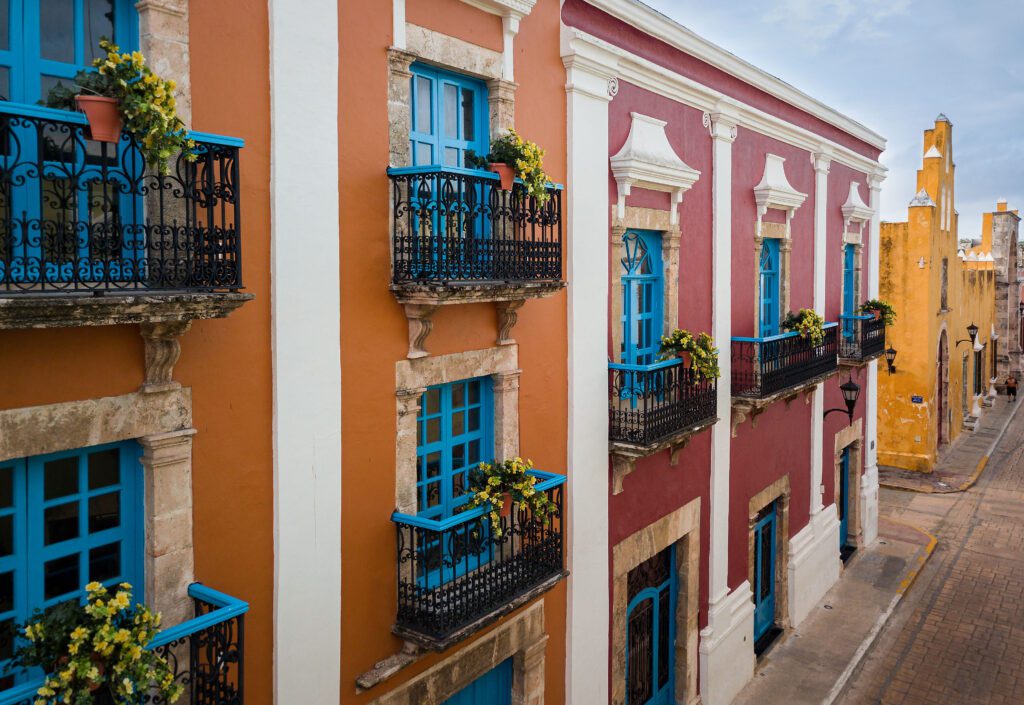
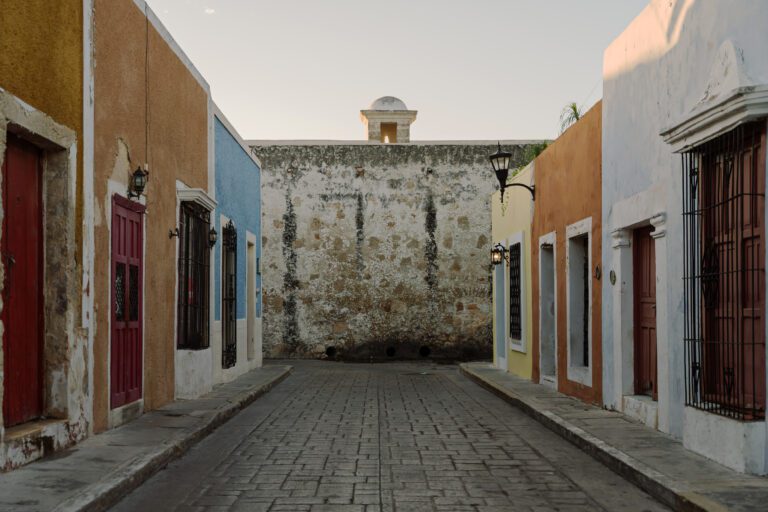
Choose Campeche if you want to feel like you’ve found somewhere — a UNESCO-protected historic center where the streets empty at dusk, the colors are almost theatrically beautiful, and the walls that once kept pirates out now hold the noise of the modern world at a respectful distance.
Many travelers, given the chance, visit both. But if your itinerary forces a choice, what follows should help you make it well.
First Impressions: Atmosphere & Scale
Mérida is a city. With nearly a million residents in its metropolitan area, it hums with the energy of a regional capital — busy markets, live music on weekend evenings, traffic, ambition. Its centro histórico is magnificent, but it shares space with pharmacies, government offices, and the ordinary textures of urban life.
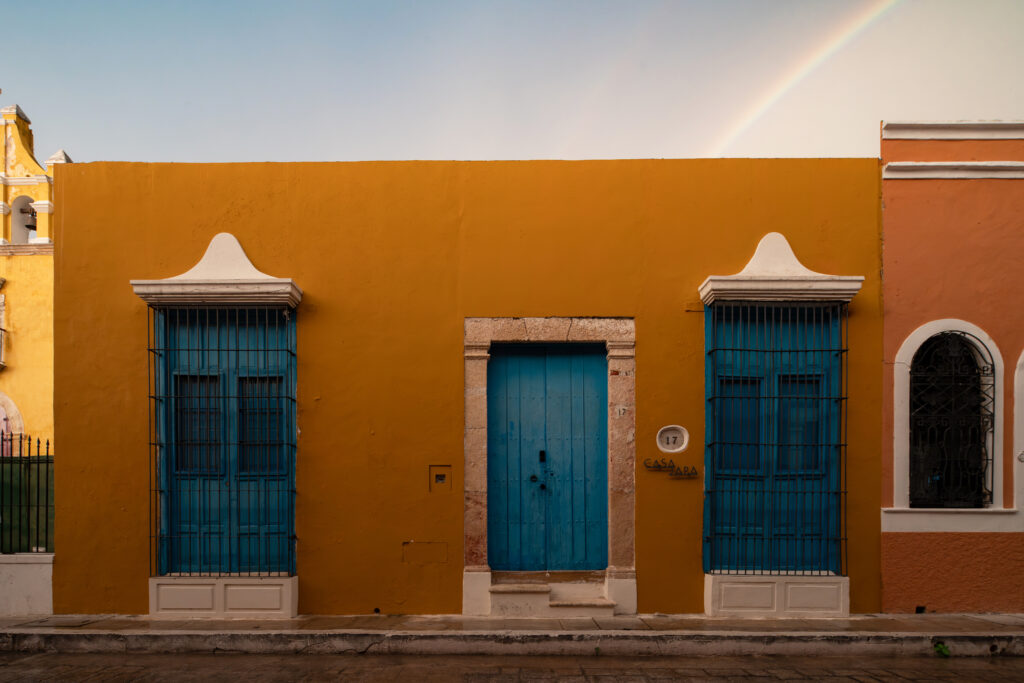
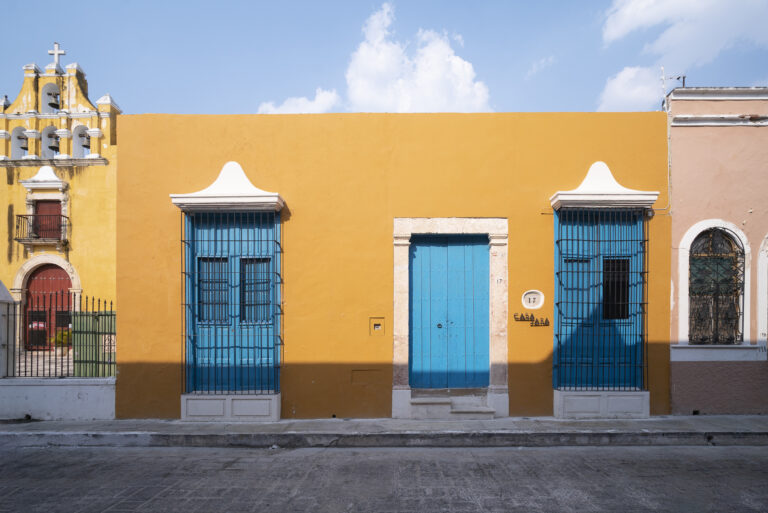
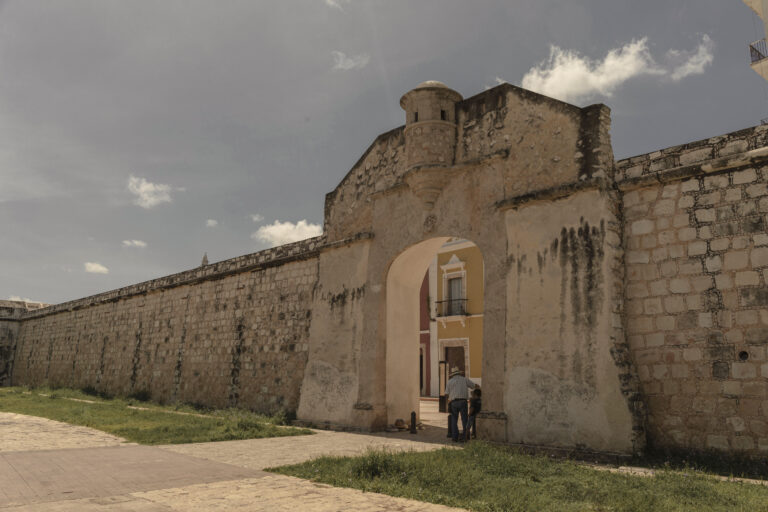
Campeche is something rarer: a colonial city that has remained, in scale and in spirit, much as it was designed. The hexagonal fortified walls still encircle the historic center. The pastel-painted houses — ochre, cobalt, rose, sage — run in unbroken rows along streets wide enough for a carriage but not much more. There are perhaps 220,000 people in the city; inside the walls, on a quiet Tuesday afternoon, you might feel like you have the place entirely to yourself.
That stillness is either Campeche’s greatest asset or its greatest limitation, depending on who you are.
UNESCO Status: One Designation That Changes Everything
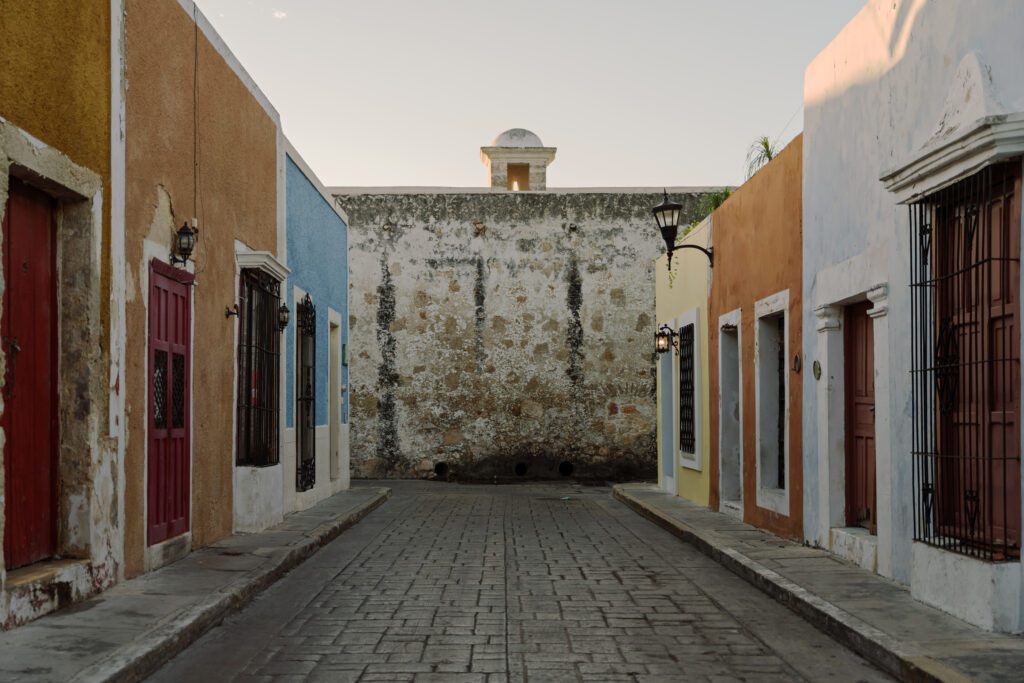
One distinction is worth making clearly. Campeche holds a UNESCO World Heritage designation, awarded in 1999, recognizing the integrity of its Spanish colonial military architecture — the walls, bastions, and urban grid preserved almost entirely intact. Mérida, by contrast, does not appear on the World Heritage List, though the city holds other UNESCO recognitions, including its designation as a Creative City of Gastronomy since 2019. The major Maya UNESCO sites in the region — Uxmal, Chichén Itzá — lie near Mérida but are independent designations.
For architecture travelers, this distinction matters. Campeche is not simply a colonial city with old buildings. It is one of the few places in the Americas where an entire fortified colonial urban system — streets, gates, ramparts, and domestic architecture — has survived together as a coherent whole.
Architecture: Depth vs. Spectacle
Mérida’s colonial mansions along Paseo Montejo are genuinely spectacular — French-influenced, grand, built during the henequen boom of the late 19th century. They are worth an afternoon, easily.
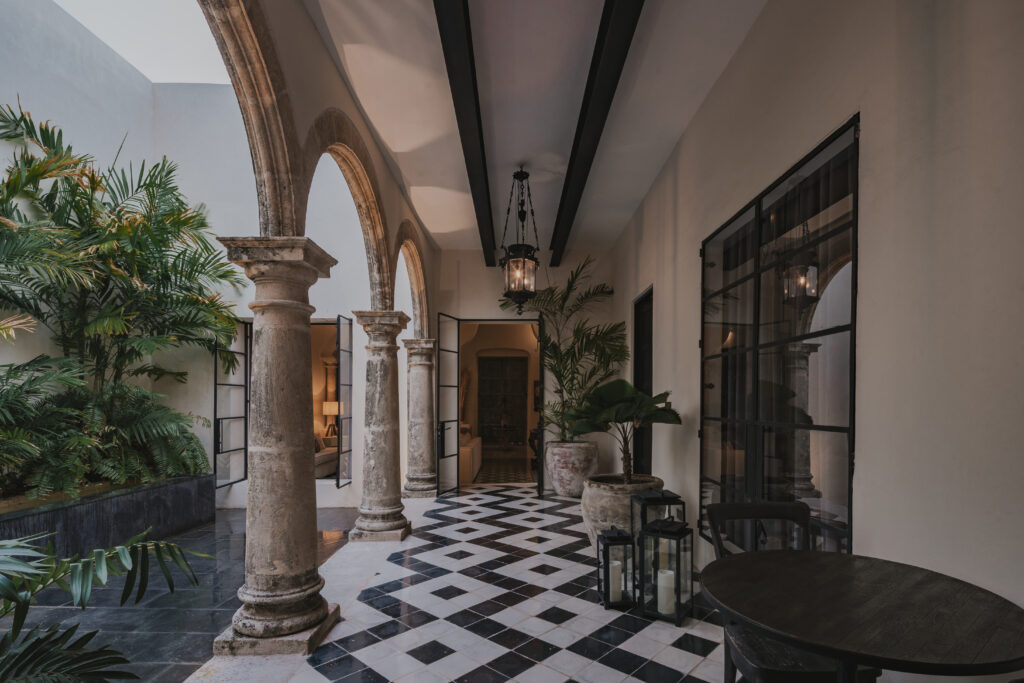
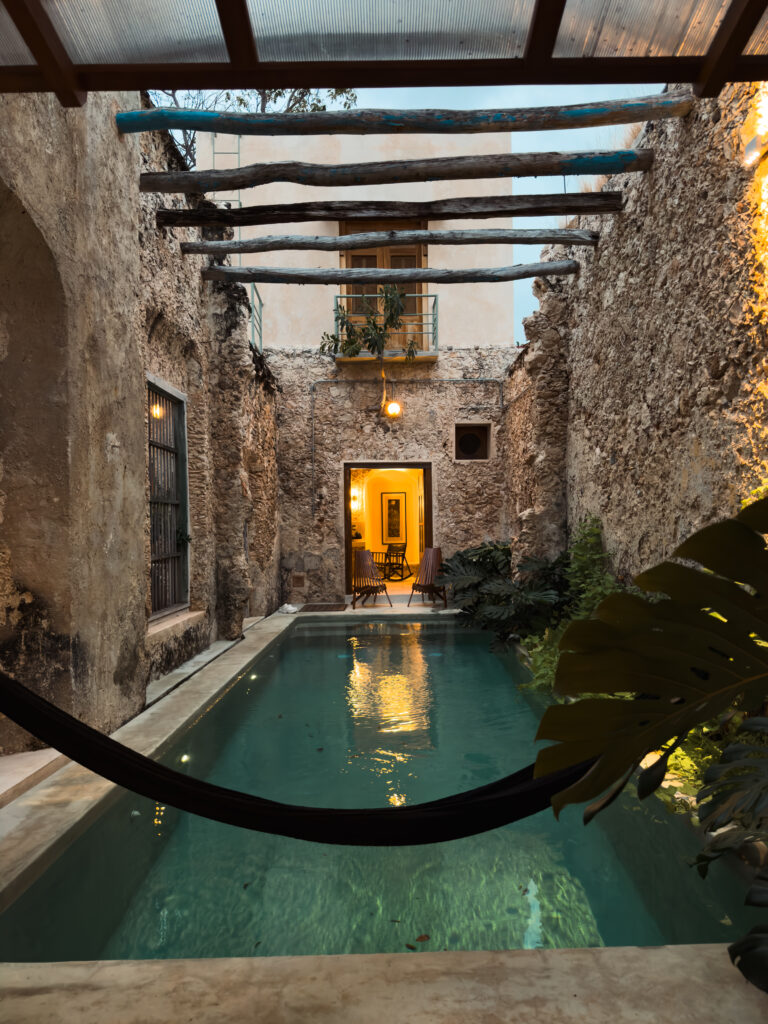
But Campeche’s architecture is older, quieter, and arguably more moving. The houses date primarily from the 17th and 18th centuries. Their thick lime-rendered walls were built to withstand tropical heat and the occasional cannonball. Inside, rooms open onto interior courtyards where the air is cool and the sound of the street disappears entirely.
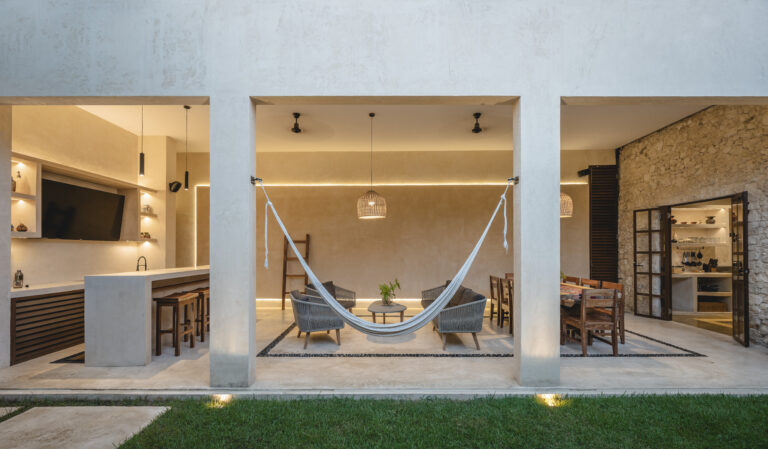
This is precisely the architecture that defines the houses managed by Casonas MX — heritage properties restored with careful attention to their original proportions and materials, where guests sleep in rooms that have witnessed three centuries of history. Staying inside the walls is not an amenity. It is the experience.
Crowds & Tourism
Mérida receives approximately 2.5 million tourists annually. It has the infrastructure — and the prices — to match. The centro histórico on a Saturday evening can feel genuinely crowded, particularly around the Plaza Grande.
Campeche receives a fraction of that number. It appears regularly on “underrated Mexico” and “hidden gem” lists, but in practice remains remarkably free of mass tourism. There are no cruise ship hordes, no souvenir-market pressure, no queue for the cathedral.
For some travelers, this reads as a lack of amenities. For others — particularly those who travel for architecture, atmosphere, and the particular pleasure of a city that hasn’t been curated entirely for visitors — it is the whole point.
Food & Gastronomy
Mérida has a legitimately excellent restaurant scene. From upscale Yucatecan cuisine (cochinita pibil, sopa de lima) to international dining, the culinary options are broad and well-developed.
Campeche’s gastronomy is more specialized — and, for those who appreciate it, more distinctive. The cuisine here reflects the city’s maritime history: pan de cazón (tortillas layered with shark and black beans), camarones al coco, and a regional complexity that rarely travels beyond the state. Eating in Campeche is genuinely local in a way that few Mexican cities still offer.
Practical Logistics
Getting There
Mérida has an international airport with direct connections from the US, Canada, and several European hubs. Campeche has a smaller regional airport with connections primarily through Mexico City — though it is easily reached by car, train or bus from Mérida (roughly 2.5 hours) or from Cancún (approximately 4–5 hours).
Getting Around
Both historic centers are entirely walkable. Mérida requires taxis or ride-shares to reach outlying sites; Campeche’s compact walled city means that nearly everything you’ll want to see is within 15 minutes on foot.
Cost
Campeche runs noticeably less expensive than Mérida for restaurants and local services. Heritage accommodation inside the walled city — the kind offered by Casonas MX — occupies a distinct category: boutique properties that offer privacy, space, and architectural authenticity that no hotel corridor can replicate.
Who Should Choose Campeche?
- Travelers who have already visited Mérida and want something different
- Architecture enthusiasts and cultural travelers
- Those who prefer depth over breadth — two days truly inside a place rather than four days moving through it
- Couples or small groups seeking a private, atmospheric base for exploring the peninsula
- Anyone drawn to the idea of sleeping inside an 18th-century house, in a city that still feels like its own secret
The Honest Verdict
Mérida is the more obvious choice, and it rewards visitors well. But Campeche is the city that tends to stay with people. It appears in their photographs differently — quieter, more considered, more itself. Travelers who find it often describe a particular feeling: that they arrived somewhere real.
If that’s what you’re looking for, the walls are already waiting.
Casonas MX manages a collection of restored colonial houses in Campeche’s historic center — available for private stays, extended visits, and curated experiences inside the walled city. Explore the properties →
I never realized Campeche’s walled city offered such a peaceful contrast to Mérida’s buzz; it makes me want to spend more time there exploring its streets at dusk. The way you describe the colors and quiet really brings the city to life and highlights why travel is about matching a place to your mood and style.